|
Family: Ericaceae
Native to: Washington, Oregon, northern California, southwestern British Columbia, west of the Cascade Range
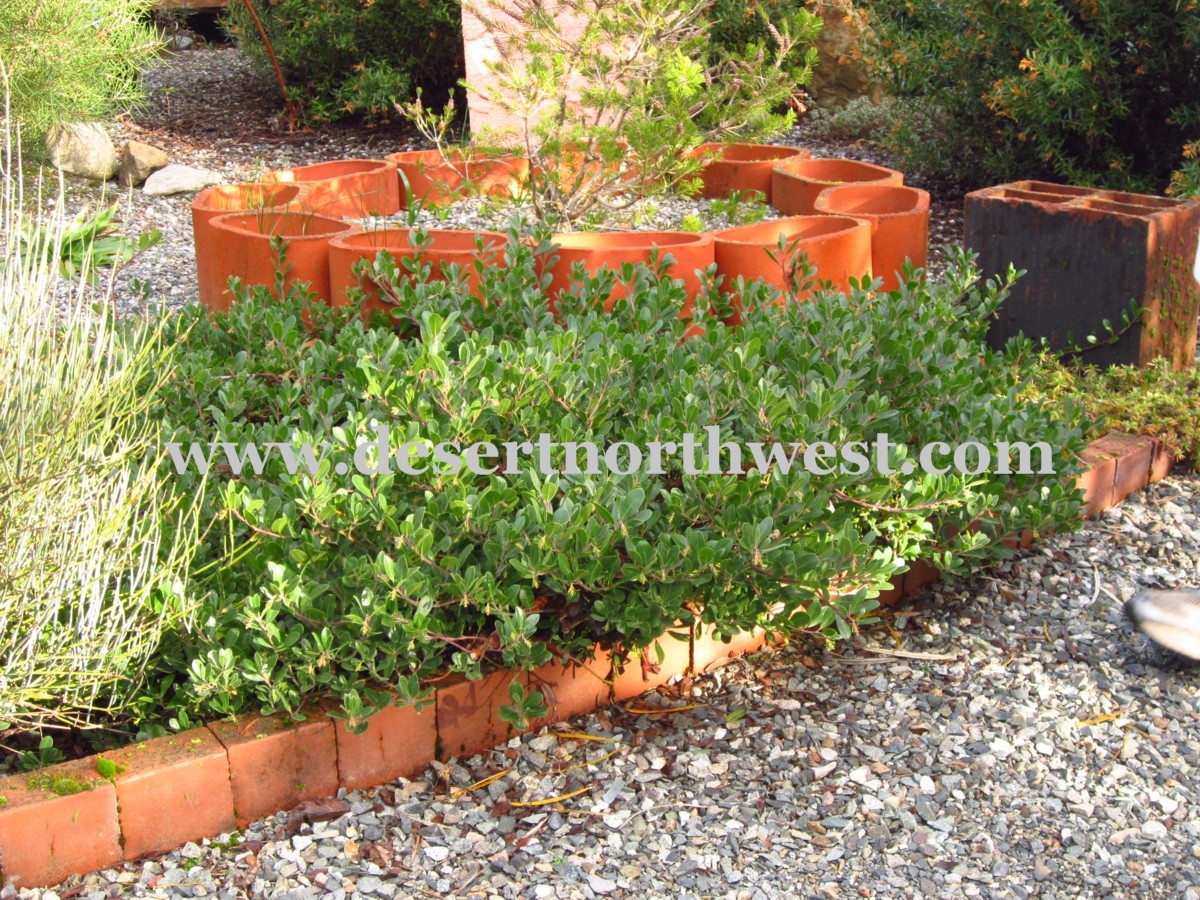
Dimensions: variable depending on the clone, anywhere from 1 - 5' tall, 3 - 12' wide
Cold resistance: certainly hardy to at least -10 to -20°F; could stand further testing at lower temperatures
Drought resistance: adequate west of the Cascades, would appreciate irrigation in the desert
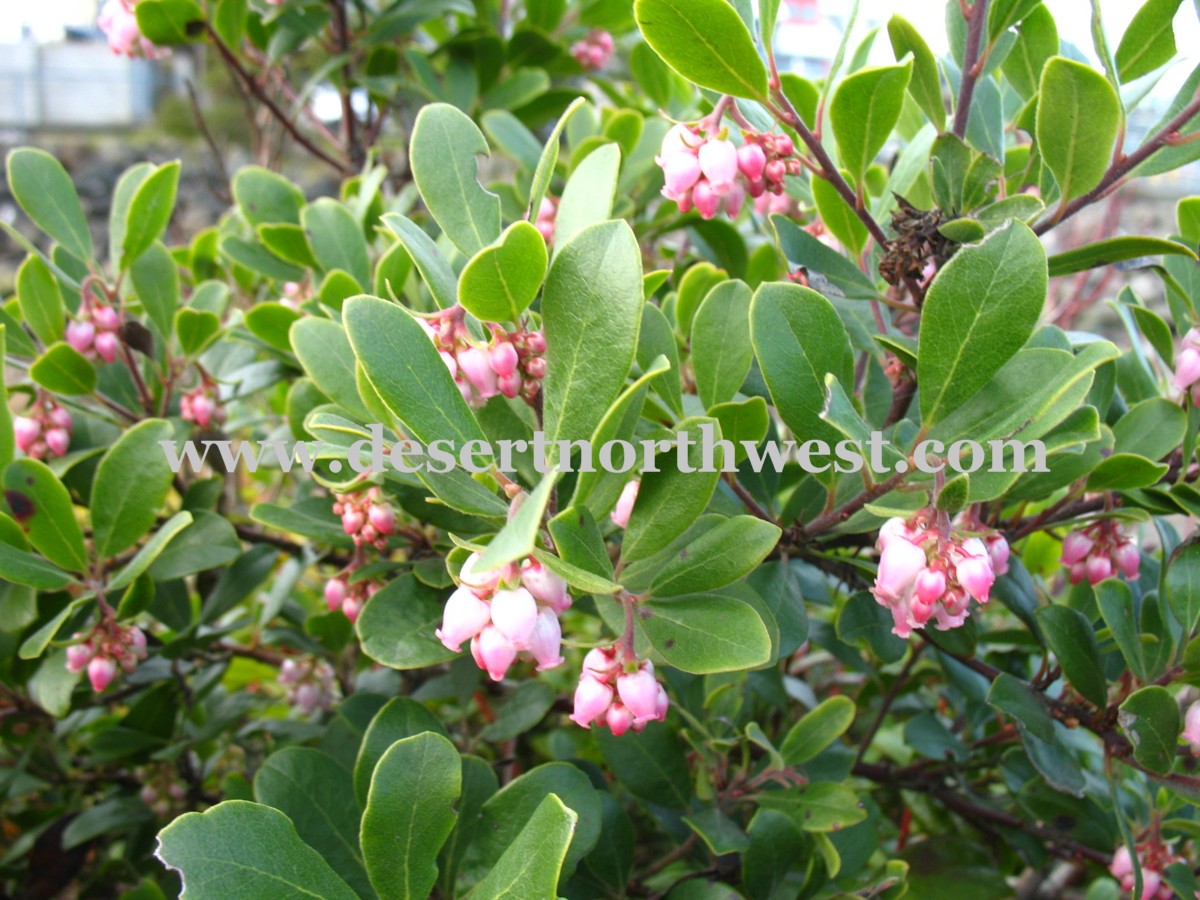
Key Features: late winter flowers attract pollinators, red fruit are consumed by birds, smooth attractive bark
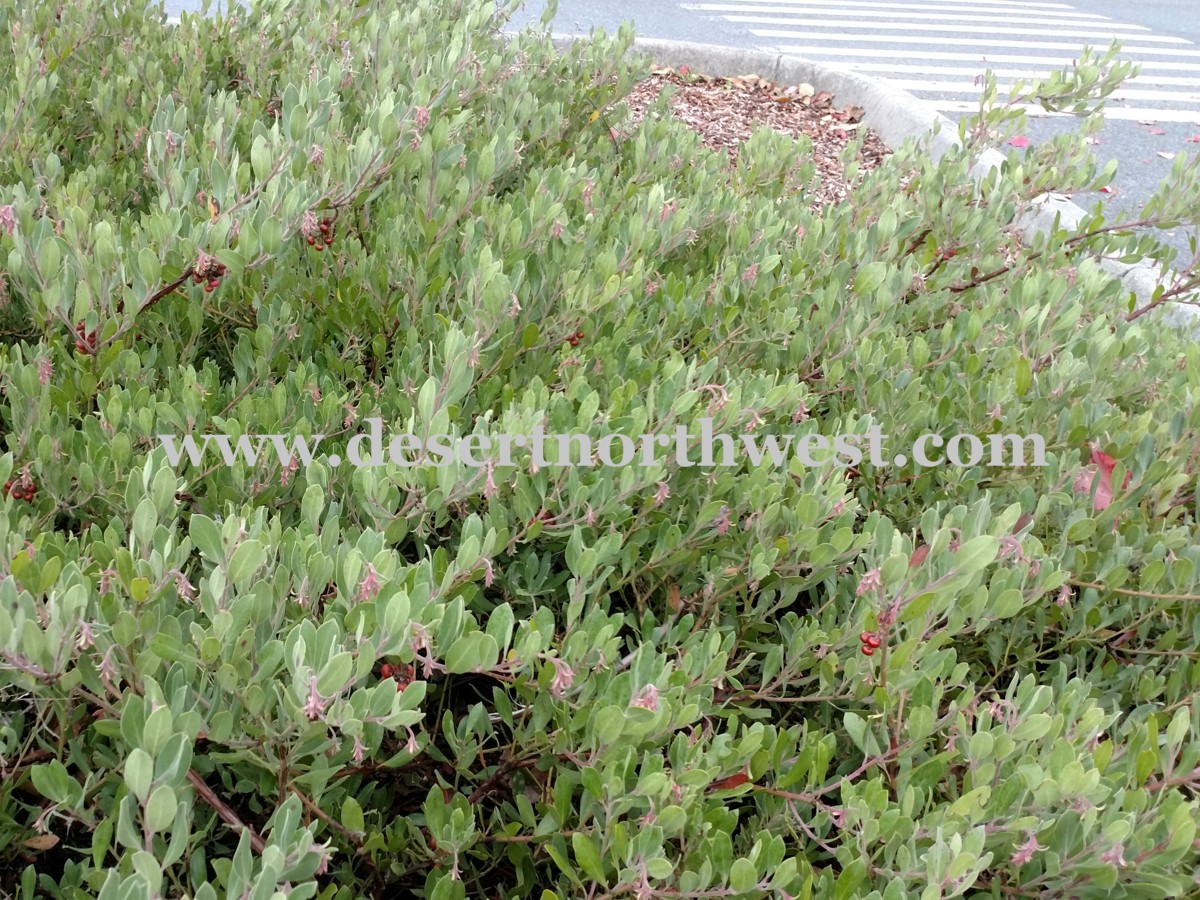
Uses: urban plantings, hellstrips, coastal plantings, small to medium scale bank cover.
Description:
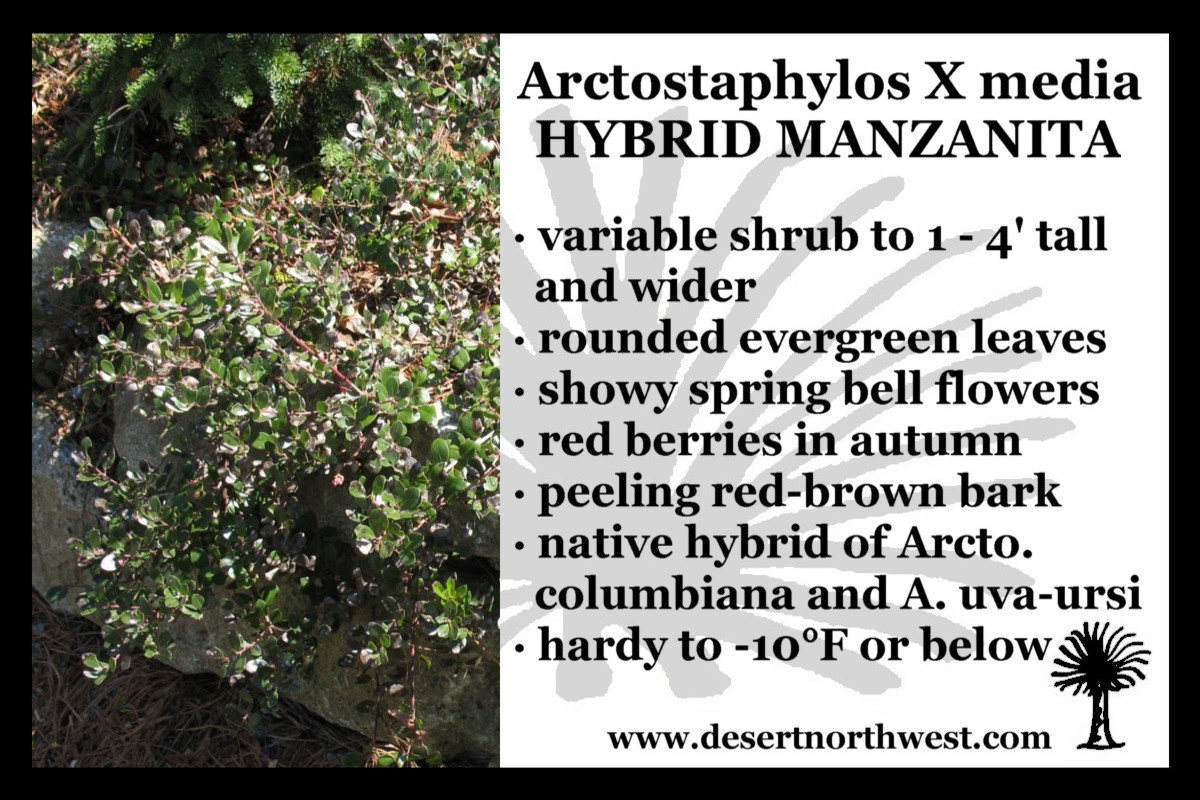
This name is given to the natural hybrids of A. uva-ursi and A. columbiana, which are found in various scattered locations around western Washington (and, less commonly, British Columbia, Oregon, and California) frequently in places where its two parent species are growing in proximity. Many variants of this hybrid exist, showing enormous variation in mature size, form, and growth rate. Some look more like A. columbiana and others look more like A. uva-ursi, though most are obvious intermediates. Although the latter species is widespread, this hybrid remains rare in cultivation. The superior forms of this hybrid are better performers in the garden than either parent, and may have showy flowers followed (as with most manzanitas) by red fall berries. We may have a number of different selections available at any given time, including the following:
- The Port Angeles form which is upright to 3' tall with deep green leaves and pink flowers in late winter.
- The Sequim form, a vigorous spreading plant to 3' tall and 6' wide with pale pink flowers.
- 'Martha Ewan', a superior form selected in the Oregon Coast Ranges by Xera plants.
- Various wild forms from plants all around the Northwest. These can be fun to try to assess their garden performance.
|